What is it?
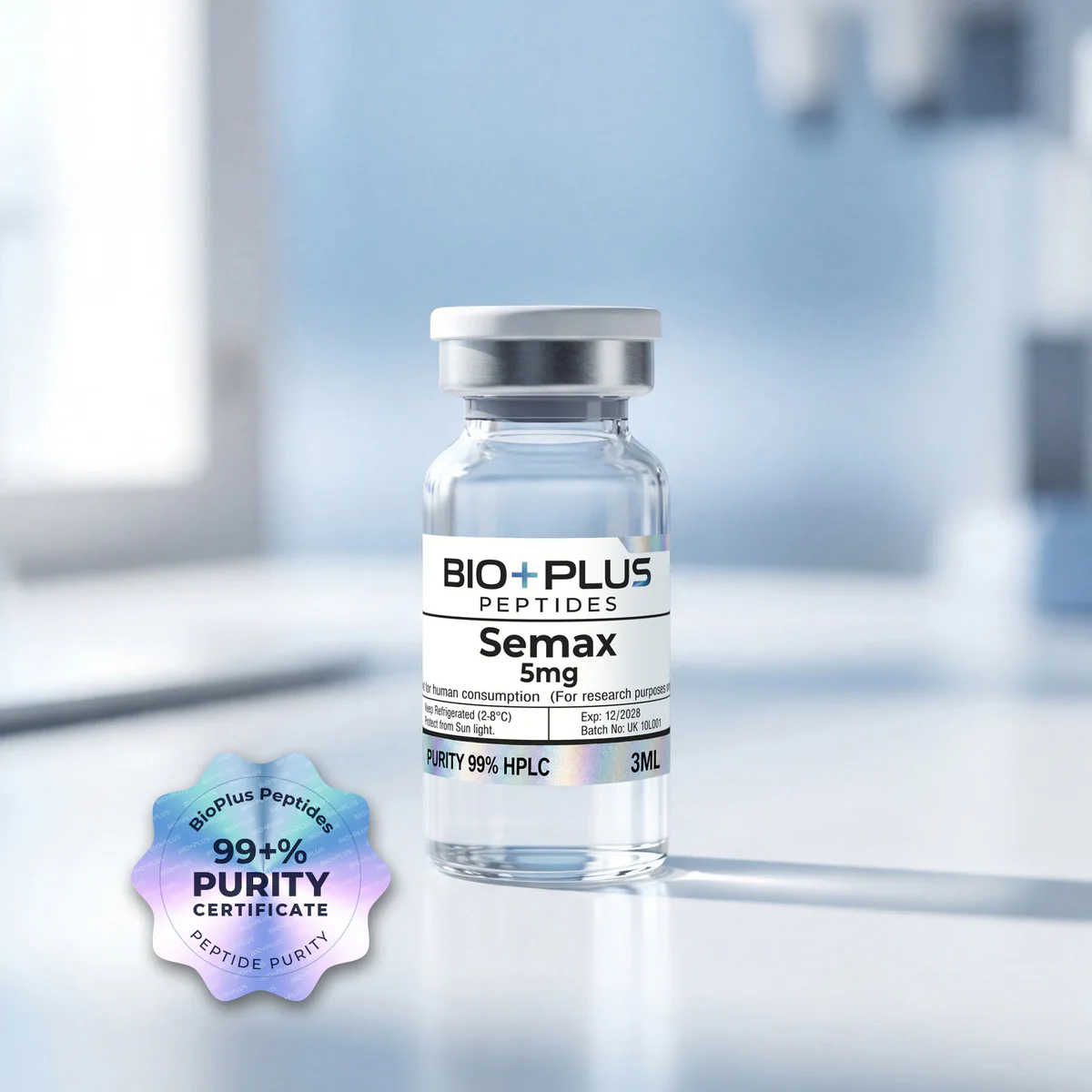
Semax is a small synthetic peptide derived from a fragment of the stress hormone ACTH. It is studied primarily for its effects on the brain – particularly on brain growth factors, nerve protection, and mood-related systems. It is approved as a drug in Russia.
Key Benefits (from research)
– Boosts brain growth factor (BDNF) — Studies in rat brains show Semax significantly increases BDNF, the protein most associated with learning, memory, and brain cell survival.
– Protects the brain after stroke – Multiple gene and protein studies show Semax counteracts the disrupted brain patterns caused by stroke-like events in animal models.
– Calms inflammation after spinal injury – Research documents increased anti- inflammatory signalling in injured spinal cord tissue following Semax treatment.
– Supports dopamine nerve cells – Animal studies show Semax protects the dopamine- producing cells relevant to Parkinson’s disease models.
– Reduces anxiety and depressive behaviour – Preclinical studies using validated stress models show Semax reduces depressive-like immobility and anxiety scores.
– Supports another nerve growth factor (NT-3) — Animal studies also show increased NT-3 expression after spinal cord compression, linked to motor neuron survival.
Quick Q&A
What is Semax used for in research?
It is used to study brain growth factor expression, neuroprotection after stroke or injury, dopaminergic cell survival, and anxiety-related behaviour.
Is it approved for people?
It is approved as a prescription drug in Russia for brain conditions. In the UK, it is not MHRA- approved and is sold here for laboratory research only.
Important Notice
Sold for laboratory research only. Not for human use. Must be 18+.
More information
Semax is a synthetic heptapeptide derived from ACTH(4-7) with a Pro-Gly-Pro extension that significantly extends its biological half-life. Studied extensively in the context of BDNF upregulation, neuroprotection, cognitive enhancement, and anxiety in preclinical models. Developed originally in Russia, it remains one of the most researched neuropeptides globally. For laboratory research use only.