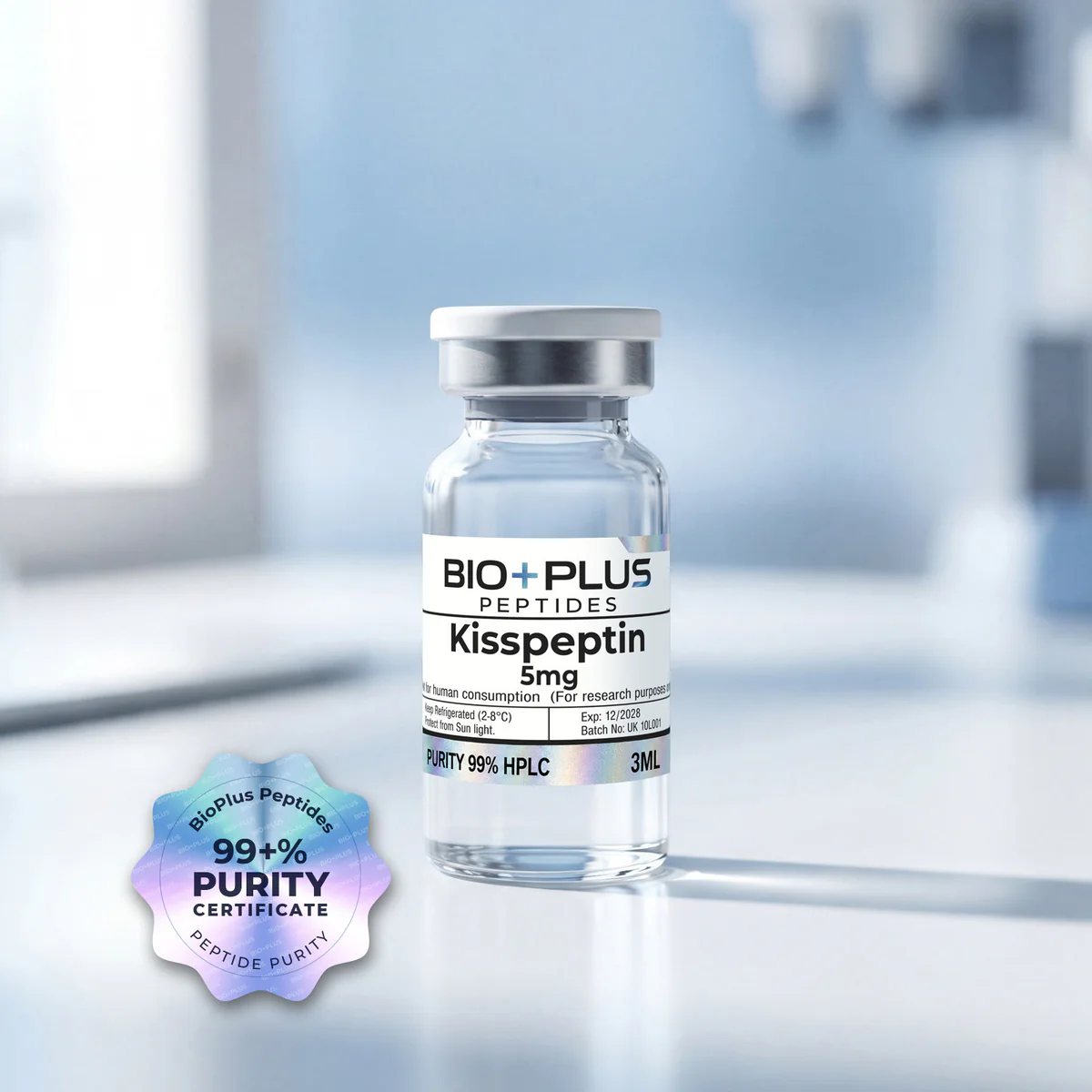
Also known as: Kisspeptin-10, Kisspeptin-54, Metastin, KP-10, GPR54 ligand
What is it?
Kisspeptin is the master signal that starts the reproductive hormone cascade in the body. Without it, puberty cannot begin and fertility is impaired. It acts on a receptor in the hypothalamus to trigger the release of reproductive hormones down the chain.
—
Key Benefits (from research)
Controls the reproductive hormone system – Research confirms kisspeptin is indispensable for activating GnRH neurons and triggering the full reproductive hormone cascade.
Initiates puberty – Mutations in the kisspeptin gene cause absent puberty in humans; research has characterised its essential role in both male and female reproductive development.
Studied as a safer IVF trigger – Clinical research shows kisspeptin can trigger egg maturation in IVF protocols with a lower risk of ovarian hyperstimulation than the conventional hCG trigger.
Influences mood and sexual behaviour – Research documents kisspeptin activity in emotional and reward brain regions, affecting sexual motivation and bonding, independent of its hormonal role.
Supports bone formation — A clinical trial showed kisspeptin directly stimulates bone-forming cells, independent of sex hormones, suggesting a role in bone health research.
Metabolic regulation – Research links kisspeptin to insulin secretion, fat cell development, and energy expenditure, making it relevant to obesity and diabetes research.
—
Quick Q&A
What is Kisspeptin used for in research?
It is studied as the master activator of the reproductive hormone system, with additional research into bone health, metabolism, mood, and safer IVF protocols.
Is it approved for people?
No – it is not approved by the MHRA, FDA, or EMA. Related compounds in the same neuroendocrine pathway are approved for other indications (e.g., menopausal vasomotor symptoms). The compound here is for laboratory research only.
Important Notice
Sold for laboratory research only. Not for human use. Must be 18+.
More Information
Kisspeptin is the protein product of the KISS1 gene and acts as the primary activator of GnRH neurons via the GPR54 receptor. It plays a master regulatory role in the hypothalamic-pituitary-gonadal axis and has been studied in models of reproductive function, puberty onset, and fertility regulation. For laboratory research use only.