What is it?
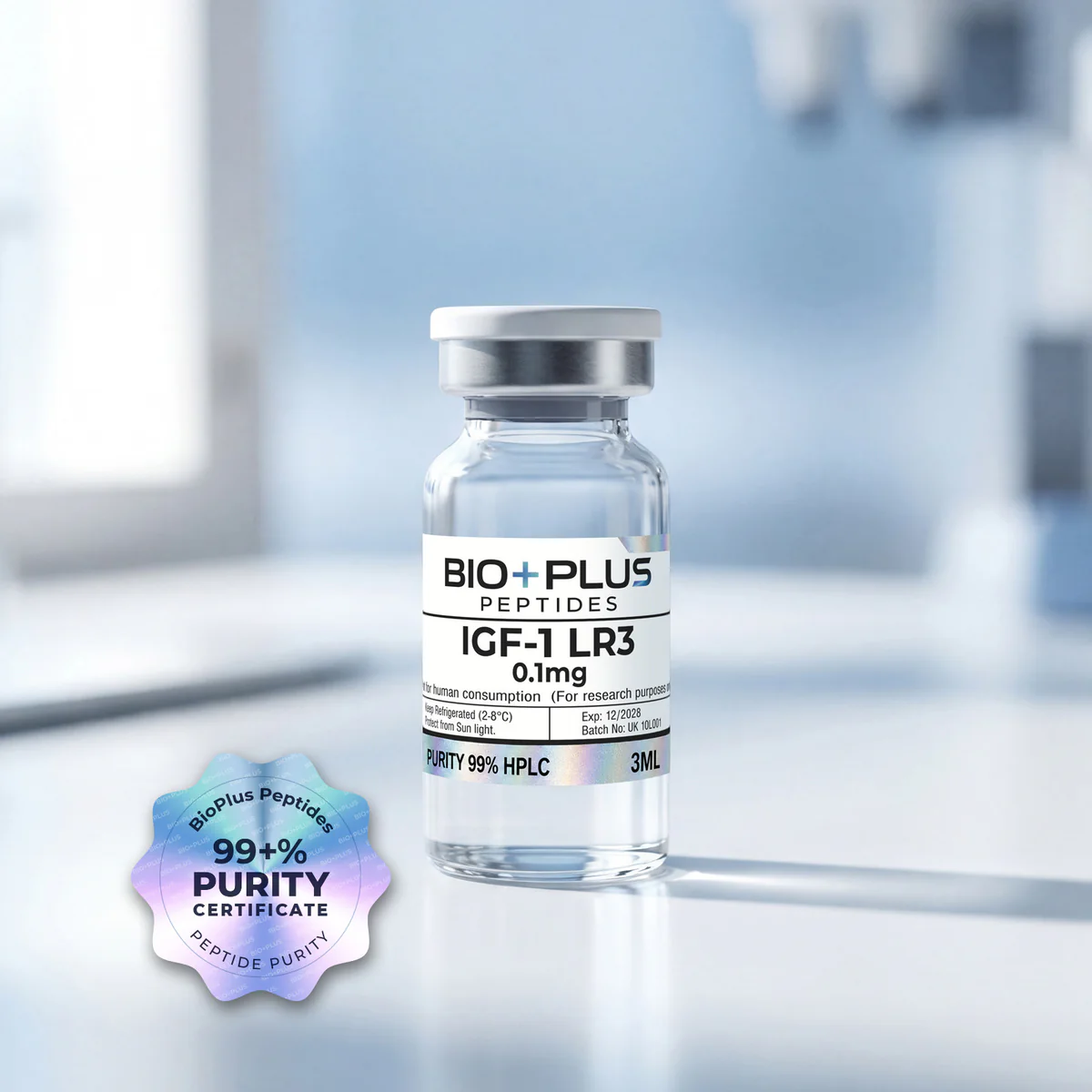
IGF-1 LR3 is a modified version of Insulin-Like Growth Factor 1 that stays active in the bloodstream much longer than the natural form. It is used in research to study what IGF-1 does to muscle, nerves, and other tissues.
—
Key Benefits (from research)
– Stays active in the body longer – Structural changes reduce binding to the proteins that normally carry and inactivate IGF-1, leaving more of it available to act on cells.
– Supports muscle growth and protein synthesis – Research demonstrates it activates a key growth pathway in skeletal muscle, promoting protein production and muscle cell enlargement.
– Activates muscle stem cells – Studies show IGF-1 stimulates the muscle’s own repair cells, supporting both muscle growth and regeneration after injury.
– Nerve regeneration research – Animal studies using IGF-1 LR3 in a nerve repair scaffold showed recovery comparable to nerve grafts.Brain and memory research Studies in Alzheimer’s mouse models show improved amyloid clearance and body composition after long-term treatment.
– Lean mass and anti-frailty research – A study of 1,833 older adults confirmed that higher IGF-1 is independently linked to more muscle mass, stronger grip, and better bone density.
—
Quick Q&A
What is IGF-1 LR3 used for in research?
It is a primary research tool for studying how IGF-1 drives muscle growth, nerve repair, protein metabolism, and brain health at the receptor level.
Is it approved for people?
No it is sold for laboratory research only.
Important Notice
Sold for laboratory research only. Not for human use. Must be 18+.
More Information
IGF-1 LR3 (Long R3 IGF-1) is a synthetic, elongated analogue of human insulin-like growth factor 1. An arginine substitution at position 3 and a 13 amino acid N-terminal extension significantly reduce binding to IGF binding proteins, resulting in a substantially longer half-life than native IGF-1. Extensively used in cell biology and muscle tissue research models. For laboratory research use only.