What is it?
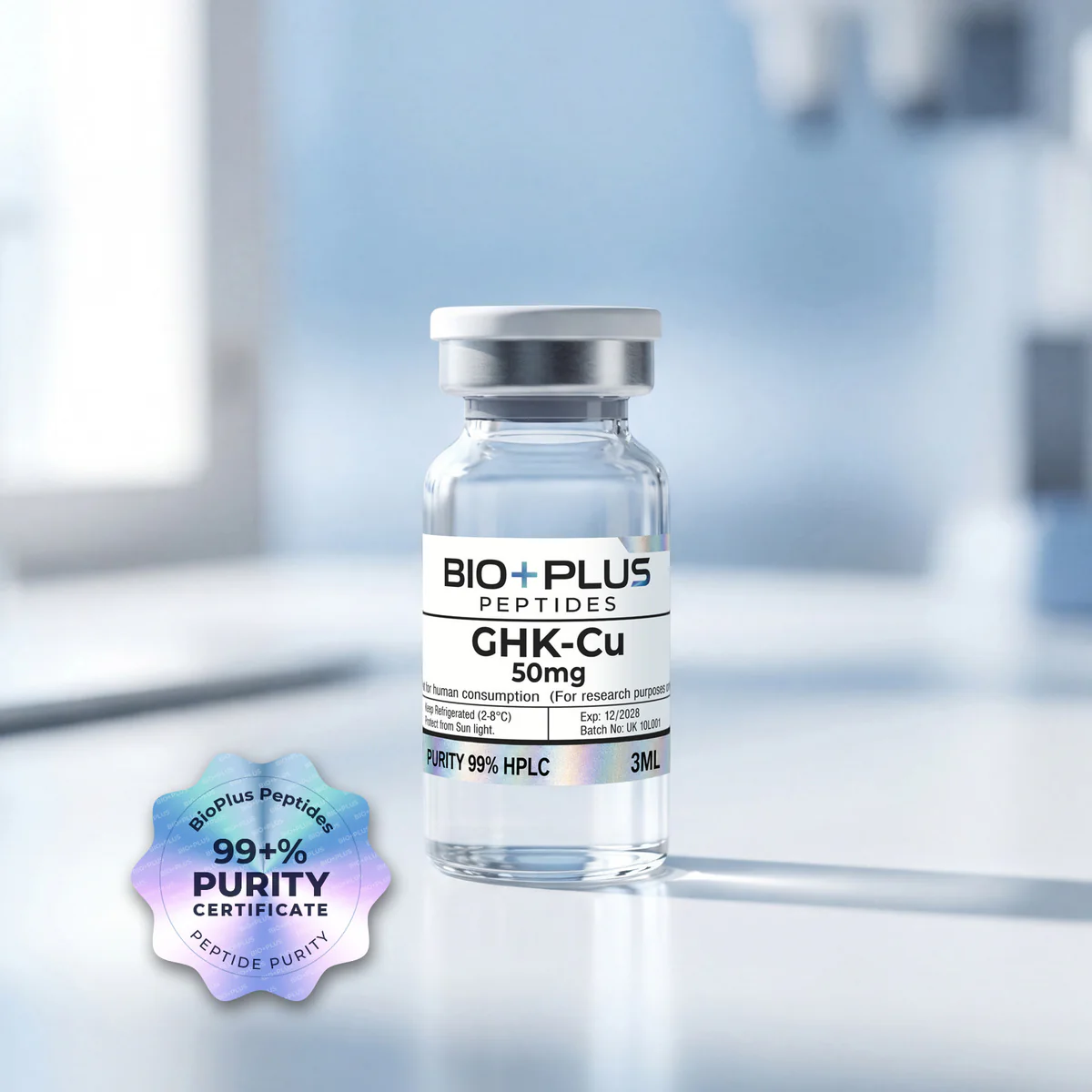
GHK-Cu is a tiny copper-containing peptide that occurs naturally in human blood. Levels fall significantly as we age. Research over five decades documents a broad range of tissue-repair and regenerative effects.
—
Key Benefits (from research)
– Rebuilds collagen and skin structure — A clinical trial (n=40) showed a 55.8% reduction in wrinkle volume using GHK-Cu in a nanoparticle cream versus a control.
– Broad gene expression effects – Broad Institute data indicates GHK-Cu influences expression of nearly a third of all human genes, including those involved in repair, ageing and inflammation.
– Reverses lung ageing gene signatures – An NIH-funded study identified GHK as the top compound capable of reversing the gene expression pattern linked to emphysema.
– Protects against oxidative damage – Research documents it blocks harmful free radicals and shields cells from UV damage and toxic lipid breakdown products.
– Supports hair growth – A clinical study (n=45) found significant improvements in hair count, thickness, and follicle density over six months.
– Reduces lung fibrosis – Preclinical research documents GHK-Cu inhibiting bleomycin- induced lung scarring through multiple molecular pathways.
—
Quick Q&A
What is GHK-Cu used for in research?
It is studied for its wide-ranging effects on collagen production, gene expression, antioxidant protection, hair follicle stimulation, and lung tissue repair.
Is it approved for people?
Not as a drug. GHK-Cu is widely used in cosmetic products under separate regulations. The research compound on this page is for laboratory use only.
Important Notice
Sold for laboratory research only. Not for human use. Must be 18+.
More Information
GHK-Cu (Copper Peptide) is a naturally occurring tripeptide consisting of glycine, histidine, and lysine complexed with copper(II) ions. Found naturally in human plasma, urine, and saliva. Extensively studied for roles in wound healing, collagen synthesis, angiogenesis, and antioxidant activity. One of the most thoroughly researched peptides in dermatological science. For laboratory research use only.