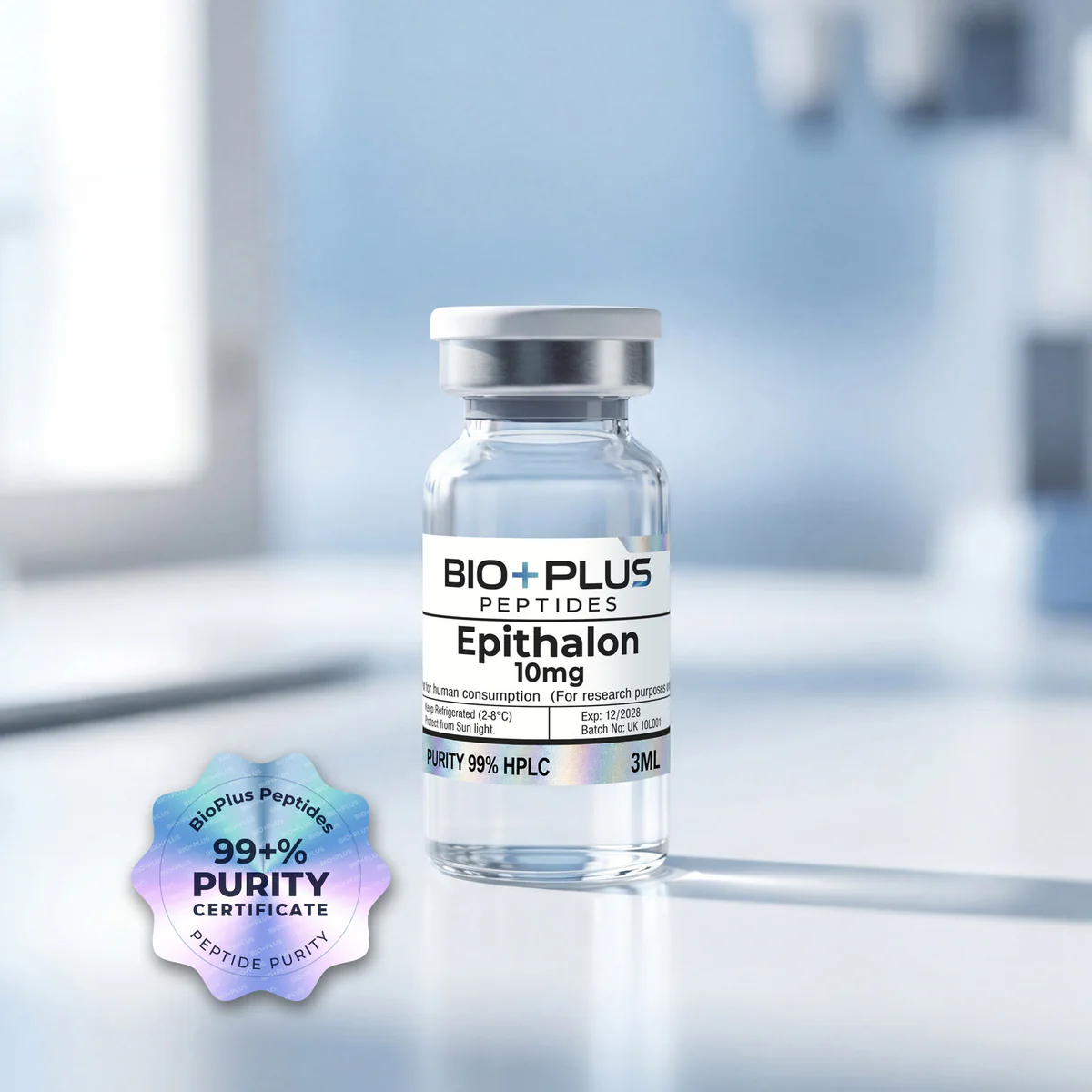
Also known as: Epitalon, Epithalone, AEDG tetrapeptide, Ala-Glu-Asp-Gly
What is it?
Epithalon is a small synthetic peptide derived from a bovine pineal gland extract. It is studied in the context of cellular ageing, primarily for its effects on telomeres – the protective caps on the ends of our chromosomes that shorten as cells age.
—
Key Benefits (from research)
– Linked to cellular ageing research – Research in human cell cultures documents telomere length extension through activation of the telomerase enzyme, averaging around 33% elongation in lymphocyte studies.
– Reduces oxidative damage – Multiple studies document reduced free radical levels in brain tissue and protection of aged egg cells from oxidative stress.
– Stimulates melatonin production – A human clinical study (n=75) found 1.6-fold greater melatonin excretion in Epithalon-treated women versus placebo.
– Regulates circadian clock genes — The same clinical trial found significant changes in expression of clock genes, suggesting an effect on the body’s internal timing system.
– Extends cell lifespan in vitro – Human foetal lung cells treated with Epithalon continued dividing 10 passages longer than untreated controls.
– Retinal cell protection – A clinical study in 162 retinitis pigmentosa patients reported improvements in visual acuity and retinal electrical activity with no side effects reported.
—
Quick Q&A
What is Epithalon used for in research?
It is studied for its effects on cellular ageing, including telomere length, melatonin production, circadian gene regulation, and cell lifespan extension.
Is it approved for people?
No it is not approved by the MHRA, FDA, or EMA. The retinitis pigmentosa study was conducted in Russia. It is sold here for laboratory research only.
Important Notice
Sold for laboratory research only. Not for human use. Must be 18+.
More information
Epithalon (Epitalon) is a synthetic tetrapeptide (Ala-Glu-Asp-Gly) derived from the pineal gland peptide Epithalamin. Studied for its ability to activate telomerase, thereby extending telomere length in somatic cells. Preclinical and some human studies have suggested effects on longevity, antioxidant activity, melatonin regulation, and cancer biomarker modulation. For laboratory research use only.